Oppressive taxation
William Tell (P. G. Wodehouse Edition)Oppressive taxation is the chief material grievance behind the Swiss people’s resistance to Hermann Gessler and the clearest early demonstration of how his rule converts authority into personal extraction. His taxes reach from livestock to everyday food and drink; when the people try to complain, he answers their petition not with relief but with more demands for money. The grievance helps turn discontent into a declared intention to rebel, while the ending refuses a neat resolution: even after Switzerland becomes free, the epilogue observes that taxes remain.
The Tax System and Its Burden
When the Emperor of Austria sends Hermann Gessler to govern Switzerland, Gessler makes taxation one of his first acts of rule. The people, described as simple and thrifty, object to paying taxes at all and want to spend their money on other things. Gessler’s policy is the reverse: he seeks to tax everything he can think of, and his position as Governor allows him to impose that policy. The levies reach across both production and consumption. A farmer who owns sheep must pay a sum to Gessler; if he sells the sheep and buys cows, the amount due for the cows is greater than what he had paid for the sheep. Bread, biscuits, jam, buns, and lemonade are taxed too. The accumulating list makes the policy feel less like a single fiscal measure than an expanding claim on ordinary life: changing what a farmer owns does not free him from payment, and even basic food and drink fall within the Governor’s reach.
Petition and Refusal
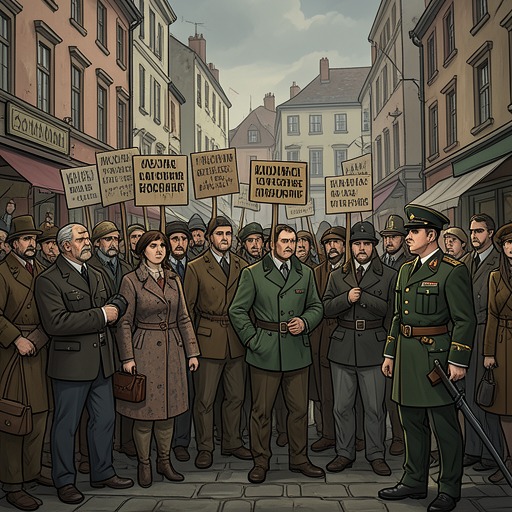
The Swiss people appoint Walter Furst, Werner Stauffacher, and Arnold of Melchthal to voice their complaint. Their meeting with Gessler in the Hall of Audience turns a collective grievance into a small, revealing encounter with power. Arnold begins naming the levies, including taxes on sheep, cows, bread, and tea, but Gessler interrupts him, says he knows the taxes, and presses the spokesmen to get to the point. The substance of their appeal is simple: there are too many taxes. Gessler offers no reduction. Instead, as the spokesmen are being dismissed, he asks them to put a “mere trifle” into a tambourine to compensate him for the trouble of granting an audience. He also demands an additional contribution from Arnold for the Imperial boiling oil. The scene turns petition into a further occasion for extraction: even the act of asking the Governor to ease taxation incurs a charge. Its comic treatment sharpens the political point, making the official audience itself part of the burden rather than a remedy for it. When the crowd asks whether Gessler will let them off the taxes, the answer is no. Walter Furst draws a deep breath and concludes that they must rebel. The sequence gives the taxes a direct place in the story’s political escalation: persistent levies prompt a petition, the refusal closes off that avenue, and rebellion becomes the announced alternative.
Taxation Within a Wider Rule of Coercion
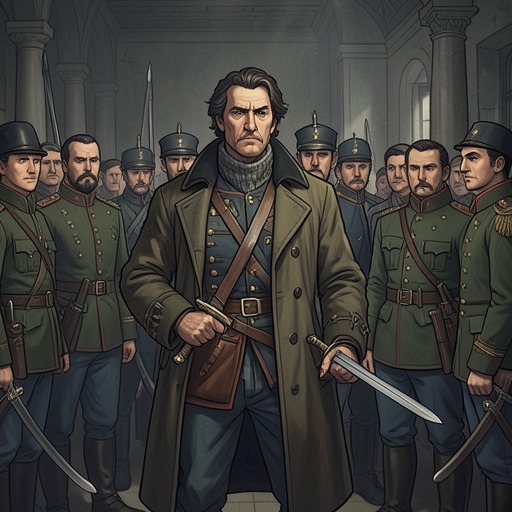
The narrative places the tax policy alongside Gessler’s habit of devising new ways to annoy the Swiss people. His Cap Homage Decree requires anyone crossing the meadow outside the city gates to bow to his cap or face arrest and punishment. That order is not another tax, but it extends the same pattern of rule: Gessler claims submission in daily life as well as money from people’s livelihoods. His threats of fantastical punishments and the crowd’s silent reception turn the decree into comic spectacle, while the soldiers’ power to arrest those who disobey makes the coercion plain. The cap episode also shows why fiscal grievance belongs to a larger conflict over authority. Gessler does not merely collect money; he insists on defining what the people owe him, whether that is payment for sheep, cows, or food, or reverence for a cap standing in his place. When Tell later shoots through the cap, Friesshardt’s account emphasizes both the guard’s order that Tell bow and the arrow that leaves the hat unusable. Taxation is not the immediate cause of that confrontation, but the episode belongs to the same portrait of a Governor who expects obedience and meets resistance.
Rebellion and the Unsettled Ending
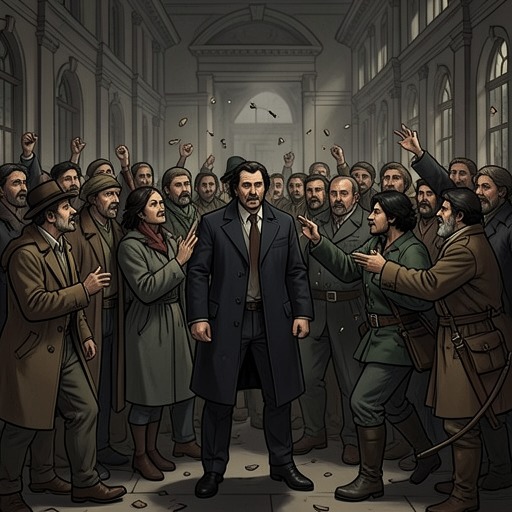
Gessler’s death becomes the signal for the Swiss people to rise against the Austrians. The narrative says that fear of the Governor had chiefly held back a rising, though revolt had been brewing for a long time: the people had sworn to drive the enemy from the country, preparations were underway, and nobles and peasants had united. After news of his death arrives, meetings are held in every town and the decision is made to begin the revolution without delay. That movement against Austrian rule has a wider history and purpose than taxation alone, but the earlier refusal to reduce the levies gives the rebellion a concrete grievance and an early turning point. The account of the fortresses adds a material image of reversal. On the same night, the Swiss take the strongholds Gessler had built during his years of rule. The last to fall had only recently been begun; people forced to help build it then pull down its stones, with children joining in. Their pleasure in undoing the work for which they had laboured gives the revolt a vivid answer to imposed burdens: those made to contribute to the Governor’s power take part in dismantling it. Yet the story does not conclude that the fiscal grievance disappears with Gessler. After the Emperor’s death, the revolution proceeds without check, and the Swiss become free; William Tell retires home to live with Hedwig and their two sons. The epilogue then complicates the triumphant ending. Its speaker allows that the tale may have been amplified or twisted, and treats the claim that Tell freed his country by demolishing the Governor as uncertain. The final certainty is narrower and more wry: taxes have not been abolished. Oppressive taxation therefore remains both an engine of the plot’s resistance and the last unresolved note in its account of liberation.